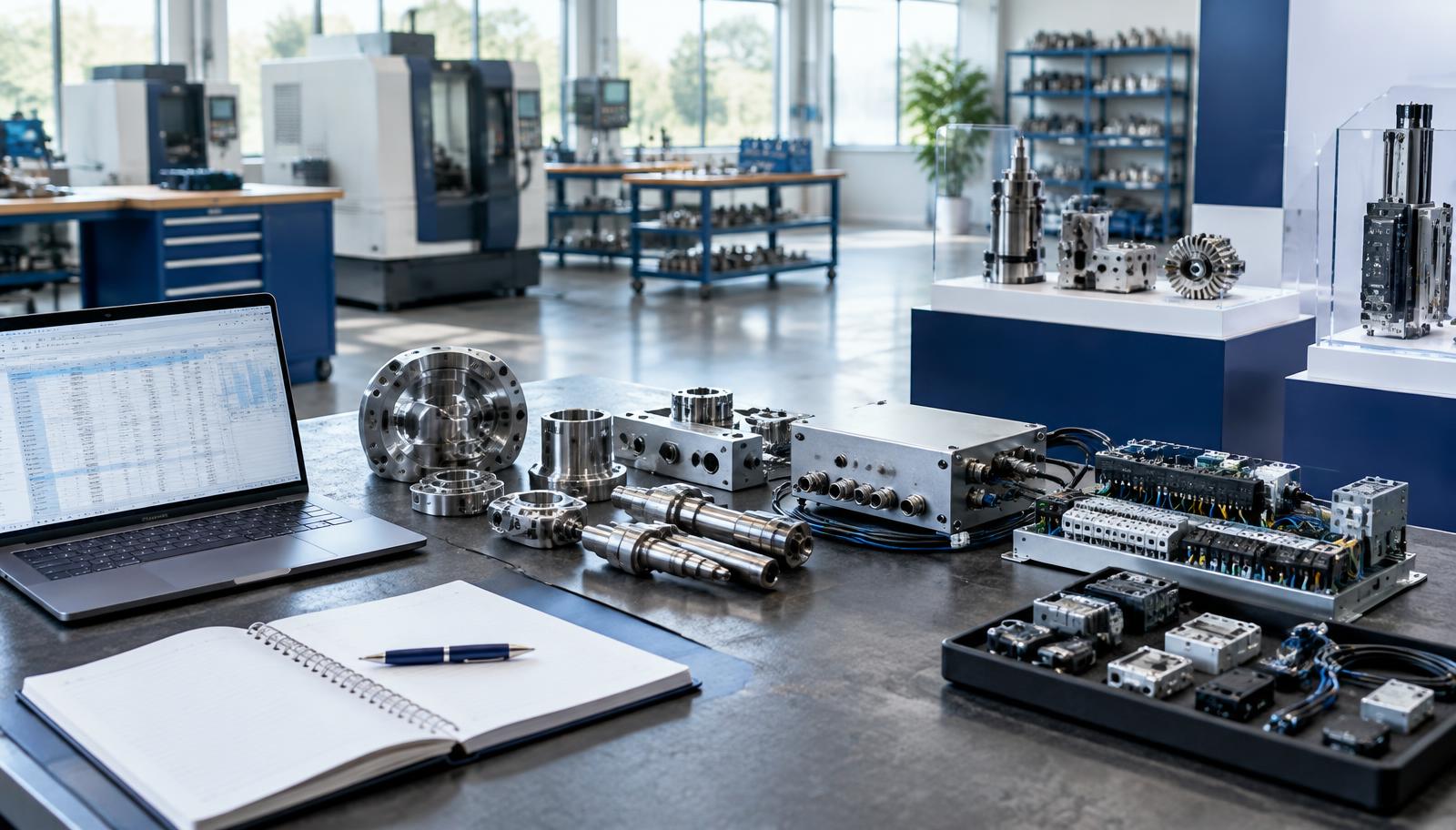
A trade show is for winning orders, finding distributors and watching competitors. If you return after three days without quotations and a customer list, it didn't work. Decide your five accounts, P&L owners and buyers before you go.
Many Taiwanese manufacturers see UAV demand but still follow OEM/ODM habits: prepare capability, then wait. With military UAV demand, specs and supply-chain restrictions moving fast, waiting for RFQs hands market discovery to someone else.
03 · Taiwan · Demand generation · Selling to manufacturers
From 1990 to 2010, many Taiwanese export factories relied on trade shows, long-standing customers and overseas agents. Those channels are weakening, leaving well-equipped factories with weak demand generation—and the people who can fix it work at multinationals.
Taiwan has precision manufacturers with strong technology and international qualifications but no modern enterprise BD infrastructure. A mold signals a new product and a production plan, so winning mold customers resembles IBM, Dell or HP-style enterprise selling.
In traditional manufacturing, deals don't grow out of a CRM; they move through the market. Industrial sales is about knowing early who won orders, lacks capacity, is switching suppliers or opening lines—before the RFQ. Enterprise software sales is pipeline execution.
Strong brands control cultural symbol, audience, use context, product architecture, channel and supply chain—in that order. Taiwanese factories start the other way, from process and materials, and end up speaking supplier language to consumers.
Large buyers used to find Taiwanese suppliers through referrals, trade shows, sourcing agents and networks. If AI agents build the first long list, 30 years of real capability can vanish behind a weak English website.
08 · North America · Reshoring · Supplier selection
Rebuilding is not moving everything back to the US. It is re-splitting parts, materials, modules and processing into domestic, nearshore, friend-shore and offshore low-cost supply, weighing cost against lead time, risk, tariffs, geopolitics, quality, redundancy and security.
Trade shows, trading companies, national pavilions, B2B platforms and agents existed to solve information asymmetry. That cost has dropped: an Italian buyer or US brand owner may now see a factory's posts directly.
11 · Europe · Emissions data · Supplier qualification
If an EU importer cannot get actual emissions data, a default value may be applied—and the cost lands on the importer. Here is why procurement will push this down the Taiwanese metalworking supply chain, and what it means for supplier selection.
Portugal offers land, power, ports, EU regulatory status, capital and project owners—but not necessarily a complete mid-stream industrial supply chain. Battery plants, data centers and hydrogen projects need equipment and parts that Taiwan makes at scale.
13 · Supplier Qualification · North America · Manufacturing
Buyers need procurement-ready capabilities, buyer-specific information, evidence and missing-document visibility. Supplier profiles must evolve as customers expand, replace suppliers and change specifications or certification requirements.
Supplier databases, RFQs and AI recommendations improve discovery. Taiwan’s fragmented manufacturing network still requires demand research, purchasing-role analysis, timing, qualification and sustained business development.
Payment collection, warranty, after-sales support and customer types: how Taiwanese factory owners already practice account qualification, risk scoring, deal review, customer success and lifetime-value judgment.
16 · Taiwan Manufacturing · Business Cards · Supply Chains
For US and European B2B teams: how Taiwanese business-card materials, layouts, bilingual titles and addresses reveal supply-chain roles, commercial priorities and founder lineage.
Understand how engineering requirements lead to manufacturing capabilities, and which public supplier information supports AI-assisted discovery and technical evaluation.
18 · Manufacturing Capabilities · Supplier Research
A practical framework for comparing Taiwanese factory capabilities: processes, materials, tolerances, quality, inquiry conditions and the status of supporting information.
Evaluate trade show ROI in Taiwan using full costs, qualified opportunities, technical follow-up and attributable gross profit—not business card counts.
Build a Taiwan B2B prospecting process without an existing supplier network: define applications, map buyers and partners, establish trust and qualify next steps.
Why limited websites and free email addresses can cause Western sales teams to overlook specialized Taiwanese factories—and how to assess identity and capability separately.